Why Cardiff Roofs Grow So Much Moss
Look up at your roof after a wet Cardiff week and there's a good chance you'll spot it: green fuzz creeping along the tiles, thick clumps clinging to the north-facing slope, dark streaks running down toward the gutter. If your roof grows moss faster than your neighbour's in a drier part of the country, you're not imagining it.
Cardiff is one of the dampest big cities in Britain, and that changes everything for a roof. This looks at why moss loves it here, what it does to your tiles over time, and what genuinely keeps it under control.
The quick answer: Moss needs moisture, shade and a rough surface to take hold, and Cardiff hands it all three. Heavy rainfall off the Bristol Channel, mild damp winters and plenty of shaded terraces mean spores settle and thrive. Removing the moss and treating the root with a biocide is what stops it coming back.
1. Cardiff's climate is a moss paradise
Moss is simple about what it wants. Give it steady moisture and it spreads. Cardiff sits right at the mouth of the Severn, where damp air rolls in off the water and rain falls across a big chunk of the year.
Compare us to the drier east of England and the gap is real. Roofs here rarely get the long dry spells that would kill young moss off. Instead they stay damp for days at a time, which is exactly the window a spore needs to root. That's why a Cardiff roof can go green in a season while a roof in Cambridge stays clear for years.
2. Shade keeps the tiles wet for longer
Sunlight dries a roof and slows moss right down. Shade does the opposite. The north-facing slope of any Cardiff house stays damp longest, and that's almost always where the moss is thickest.
Mature trees make it worse. Leafy streets in Roath, Penylan and parts of Llandaff are lovely to live on, but overhanging branches drop shade and debris onto the tiles and hold the damp in. If half your roof is green and half is clear, look at where the sun actually reaches during the day. The pattern usually explains itself.
3. Older, textured tiles give moss something to grip
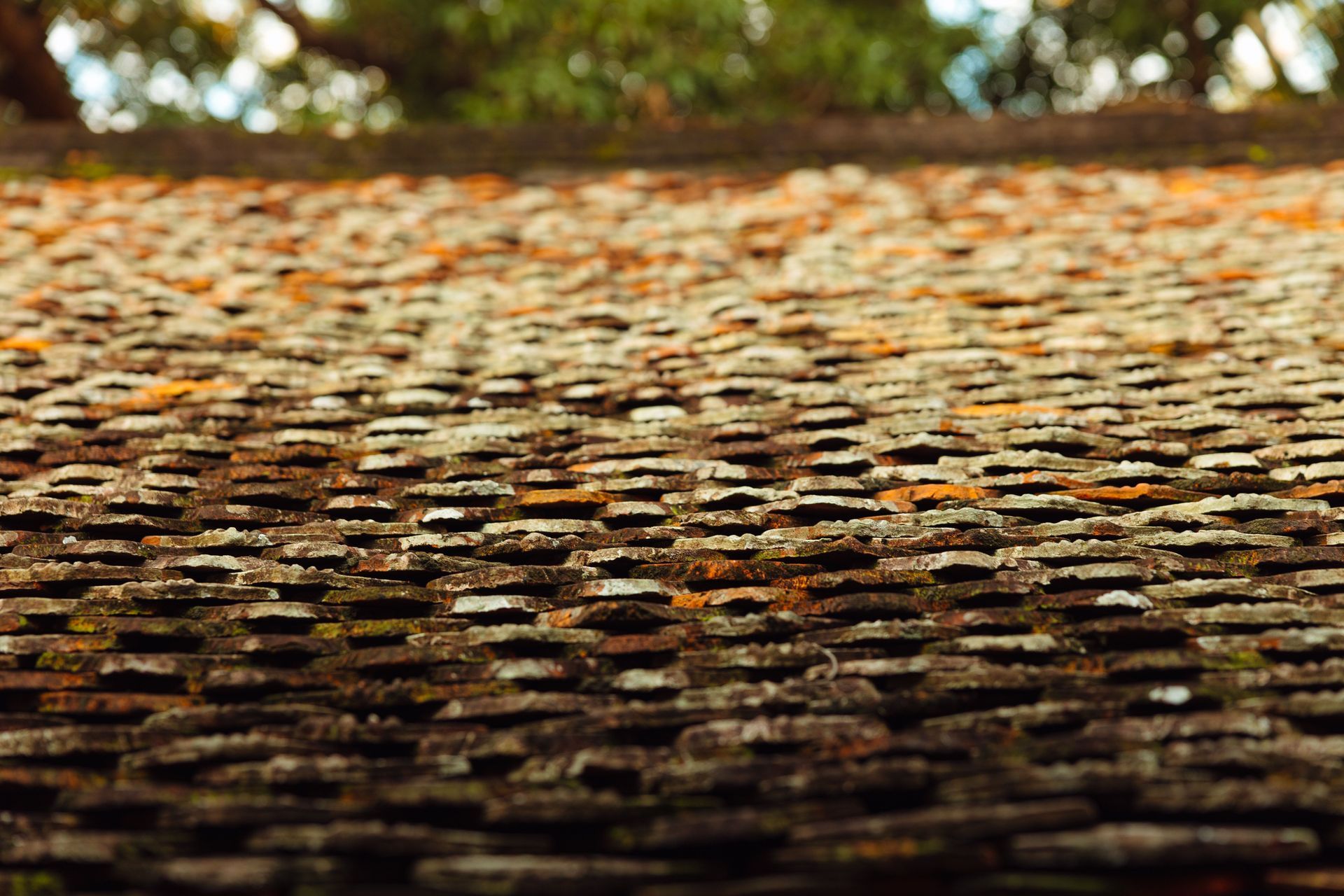
A smooth, new tile sheds water and gives spores little to cling to. An older tile is a different story. Decades of weather leave the surface pitted and rough, and every tiny hollow traps water and dirt.
Cardiff has a lot of old roofs. The Victorian and Edwardian terraces that fill Cathays, Canton and Grangetown wear slate that has weathered for a hundred years or more. That aged texture is a perfect anchor for moss. It's not that the slate has failed, it's just that time has made it grippier than it once was.
4. What moss actually does to your roof
A light dusting of moss won't sink your house. Left for years, though, it causes real problems, and they add up quietly.
Moss holds water against the tiles instead of letting it run off. That constant damp speeds up wear and, in a cold snap, freezing water expands in the gaps and can crack a slate. Clumps break loose and slide into the gutters, blocking them, so rain overflows down your walls instead of draining away. Here's what to watch for as moss builds up:
- Green or black patches spreading across the tiles, worst on the shaded slope.
- Bits of moss in the gutters or on the ground after wind and rain.
- Gutters overflowing in a downpour when they used to drain fine.
- Dark streaks running down from the ridge, a sign of algae travelling with the moss.
- Damp patches on upstairs ceilings, where trapped water has found a way in.
5. Why scraping it off yourself doesn't fix it
Plenty of people have a go at the moss with a stiff brush on a dry weekend. It feels productive, and the roof does look better for a while. But brushing only takes the top growth. The roots and spores stay put, and within a few damp months the green is back.
Worse, scraping hard at old slate can loosen or crack it, and being up on a wet terrace roof is a fall waiting to happen. Clearing the surface is only half the job. The half that lasts is treating what's left behind.
6. What actually keeps moss off a Cardiff roof
The method that works is a soft wash. The loose moss gets cleared gently, then the whole roof is treated with a biocide that kills the growth down to the root and keeps working for months afterward.
Because it deals with the cause and not just the symptom, the roof stays clean far longer than a quick scrape ever manages. In a climate as damp as ours, that treatment step is the difference between cleaning your roof once every few years and fighting the same moss every spring.
Frequently Asked Questions
Is moss on my roof actually a problem or just ugly?
Both. A little is mostly cosmetic, but left for years it traps damp, blocks gutters and can crack tiles in a freeze. It's cheaper to deal with early.
Why is one side of my roof green and the other clear?
Shade. The north-facing slope stays wet longest, so moss grows there first and thickest. The sunny side dries out and stays clearer.
Will moss come back after it's cleaned?
If you only brush it off, yes, quickly. A proper soft wash with a biocide kills the root and keeps it away for years in most cases.
Does the rain in Cardiff really make that much difference?
It does. Roofs here stay damp far more of the year than in drier parts of the UK, and that constant moisture is exactly what moss needs to spread.
How soon should I deal with moss I've just noticed?
There's no panic, but don't leave it for years. Booking a clean before it clogs the gutters or gets into a freeze-thaw cycle saves you money later.
Losing the battle with moss on your roof?
Ben's Roof Cleaning clears and treats mossy roofs across Cardiff and South Wales, with over 15 years of experience. Get in touch or call 029 2002 8124
for a free, no-obligation quote.
Damp weather is here to stay, but the moss doesn't have to be
You can't change Cardiff's rain, and honestly most of us wouldn't want to trade the green hills that come with it. What you can change is how long moss gets to sit on your roof doing damage. Clear it, treat it at the root, and keep an eye on the shaded slope where it always starts. Do that and your roof handles the wet weather the way it's meant to, for years at a time.