Soft Washing vs Pressure Washing: The Safer Way to Clean a Cardiff Roof
You've probably seen a neighbour's roof being blasted with a pressure washer, water and green gunk flying everywhere, and thought your own mossy tiles could do with the same. It looks satisfying. The problem is that the fast, forceful method is often the one that quietly wrecks a Cardiff roof, especially the older slate ones you find all over Cathays, Roath and Canton.
So how do you get rid of the moss without shortening the life of your roof? This comes down to two very different approaches: pressure washing and soft washing. Here's what each one actually does, why it matters for the kind of roofs we have in Cardiff, and how to pick the right one.
The quick answer: Soft washing cleans your roof with low-pressure water and a biocide that kills moss, algae and lichen at the root. Pressure washing relies on brute force, which can strip the surface off tiles and crack old slate. For most Cardiff homes, soft washing is the safer choice and the results last far longer.
1. What pressure washing really does to a roof
A pressure washer throws water at the surface hard enough to tear moss straight off. That part works. What most people don't see is the damage happening underneath the mess.
Roof tiles and slates have a weathered outer layer that sheds water. Hit that with a high-pressure jet and you scour it away, leaving the surface rougher and more porous than before. Rougher tiles hold water and dirt, which means moss comes back faster and thicker than it was to begin with. On Cardiff's older Welsh slate roofs, the risk is worse. A hard jet can crack a slate, lift the nibs, or force water up under the laps and into the roof space.
I've seen roofs cleaned this way that looked spotless for a summer, then greener than ever within two years. Fast is not the same as good.
2. How soft washing works instead
Soft washing takes the opposite view. Instead of blasting the growth off, you treat it. A low-pressure spray carries a biocide across the whole roof, and that solution kills the moss, algae and lichen down to the root.
The dead growth then drops away over the following weeks, helped along by Cardiff's regular rain. Nothing gets scoured, nothing gets forced under the tiles, and the biocide keeps working long after the visit is done. It's slower to show its full result, but it's kinder to the roof and it lasts.
3. Why Welsh slate and old tiles hate high pressure
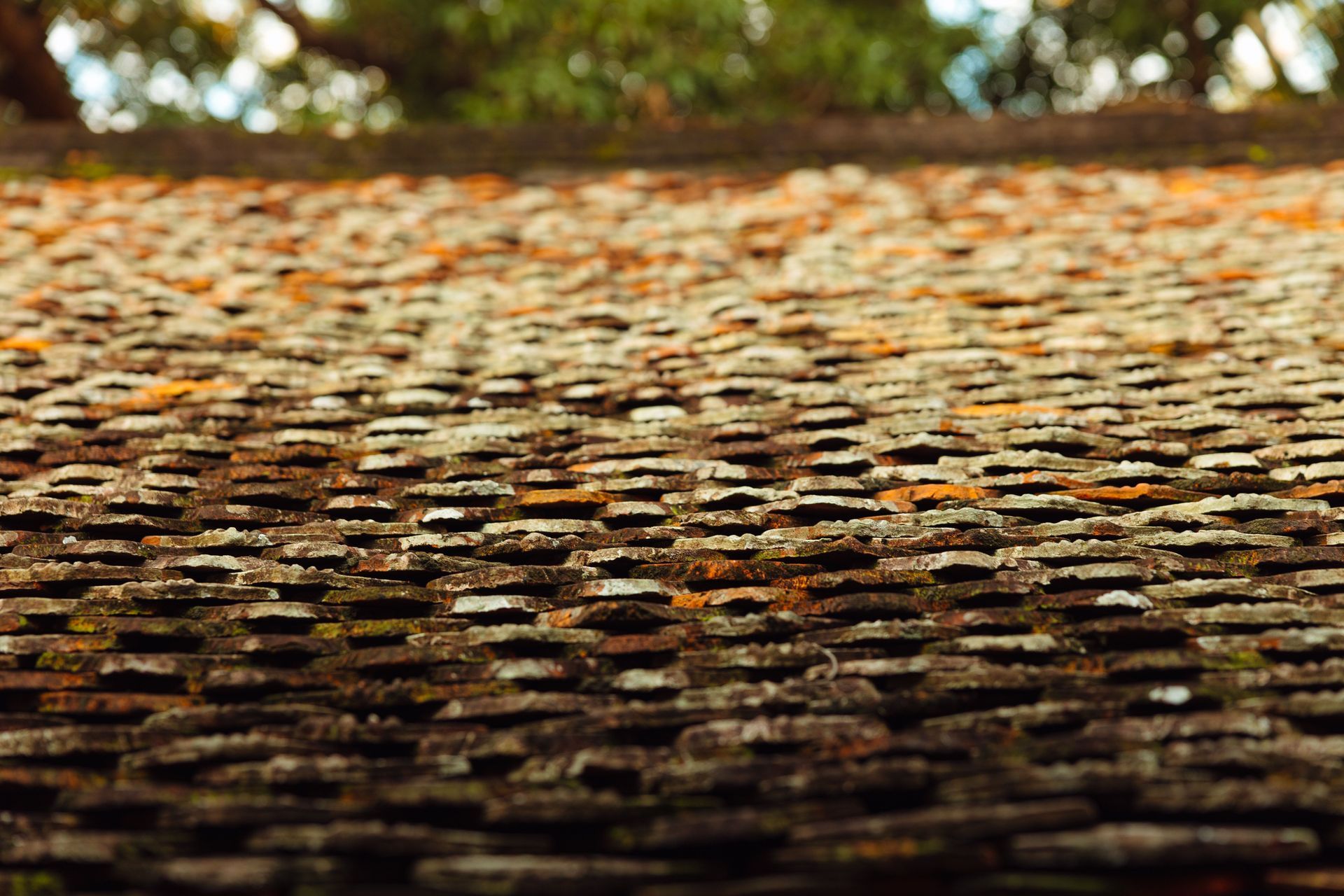
Cardiff has a lot of Victorian and Edwardian housing, and a huge share of it still wears its original Welsh slate. Slate is brilliant stuff. It can last a century or more. But it splits along its natural layers, and an old slate that's already thinned by decades of weather is fragile in a way a jet of water doesn't forgive.
Concrete tiles from the interwar semis out in Rhiwbina or Llanishen have their own weak point: a factory coating that gives them colour and helps them shed water. Pressure washing strips that coating. Once it's gone, the tile ages fast. Soft washing leaves both slate and coating intact.
4. What a soft wash looks like on a Cardiff home
The job usually starts with a proper look at the roof, the gutters and the access. A safe working position matters, and the terraces around here often mean ladder work from the front and rear.
Any loose moss gets cleared by hand or with a gentle scrape first, so the biocide can reach the surface. Then the whole roof gets treated with the low-pressure spray. Gutters are usually cleared at the same time, because that's where all the loosened moss ends up. The visit itself is quiet and undramatic. No thunder of a pressure washer, no green slurry down the street.
5. How long the results actually last
This is where soft washing pulls ahead. Because the biocide kills the growth at the root and lingers on the surface, a soft-washed roof stays clean for years, not months.
Pressure washing only removes what's there on the day. The spores stay behind, the surface is rougher, and in a damp city like Cardiff the moss is back before long. Treat the cause and you buy yourself real time.
6. Choosing someone to do the work
Not every "roof cleaner" cleans roofs the same way, so it's worth asking a few plain questions before anyone climbs up. Here are the things that separate a careful job from a risky one:
- Ask which method they use. If the answer is pressure washing on slate, be cautious. Ask why and what they do to protect the tiles.
- Check they treat, not just blast. A biocide step is what stops the moss coming straight back.
- Make sure gutters are included. Loosened moss has to go somewhere, and it's usually the gutter.
- Look for local experience. Someone who knows Cardiff slate and terrace access will handle your roof better than a general jet-wash outfit.
- Get it in writing. A clear quote with the method spelled out saves arguments later.
Frequently Asked Questions
Will soft washing get my roof completely clean straight away?
Not on day one. The biocide needs a few weeks to kill the growth, then rain washes the dead moss off. Give it time and the roof keeps improving after the visit.
Is pressure washing ever the right choice?
On tough concrete surfaces like a patio or a hard-standing, yes. On a roof, and especially old slate, it does more harm than good.
Does soft washing damage plants in my garden?
A careful operator covers or rinses nearby planting and uses the right dilution. Tell them about any prized borders before they start.
How often will my Cardiff roof need doing?
After a proper soft wash, many roofs go several years before they need attention again. A damp, shaded roof under trees may need it sooner.
Can I just do it myself with a ladder and a hose?
Clearing a bit of gutter is one thing. Working across a wet, sloping terrace roof is genuinely dangerous, and getting the biocide right takes some knowing. Most people are better off leaving the roof to someone set up for it.
Thinking about a gentler clean for your roof?
Ben's Roof Cleaning looks after roofs, moss and gutters across Cardiff and the surrounding areas of South Wales, with over 15 years of experience. Get in touch or call 029 2002 8124
for a free, no-obligation quote.
The gentle method wins in a wet city like Cardiff
A roof is one of the most expensive parts of your home, and it's the part that takes the worst of the weather off the Bristol Channel. Cleaning it hard and fast might feel like progress, but it trades a quick result for a shorter roof life and moss that keeps coming back. Soft washing asks for a bit of patience, and it gives you a cleaner roof that stays that way. On Cardiff slate, that trade is worth making every time.