Caring for Welsh Slate and Victorian Terrace Roofs in Cardiff
If you own a Victorian or Edwardian terrace in Cardiff, the roof over your head is very likely Welsh slate, and it may well be the original. That's a remarkable thing when you think about it. The same slates have shrugged off more than a century of Cardiff weather. Treat them well and they'll do it for decades more.
The catch is that old slate needs the right kind of care. Get it wrong and you can undo a hundred years of good service in an afternoon. Here's what makes Welsh slate special, how to look after it, and what to avoid.
The quick answer: Welsh slate is tough but brittle, and it splits along its natural layers. Clean it gently with a soft wash, never a pressure washer, keep the gutters clear so water drains properly, and check for slipped slates after storms. Done right, an old slate roof easily outlives its owners.
1. Why Welsh slate ended up on so many Cardiff roofs
Cardiff grew fast in the 1800s on the back of coal, and the housing went up fast to match. The slate came down from the great quarries of north Wales, places like Penrhyn and Dinorwic, and it was the natural choice: strong, waterproof, and produced not far away.
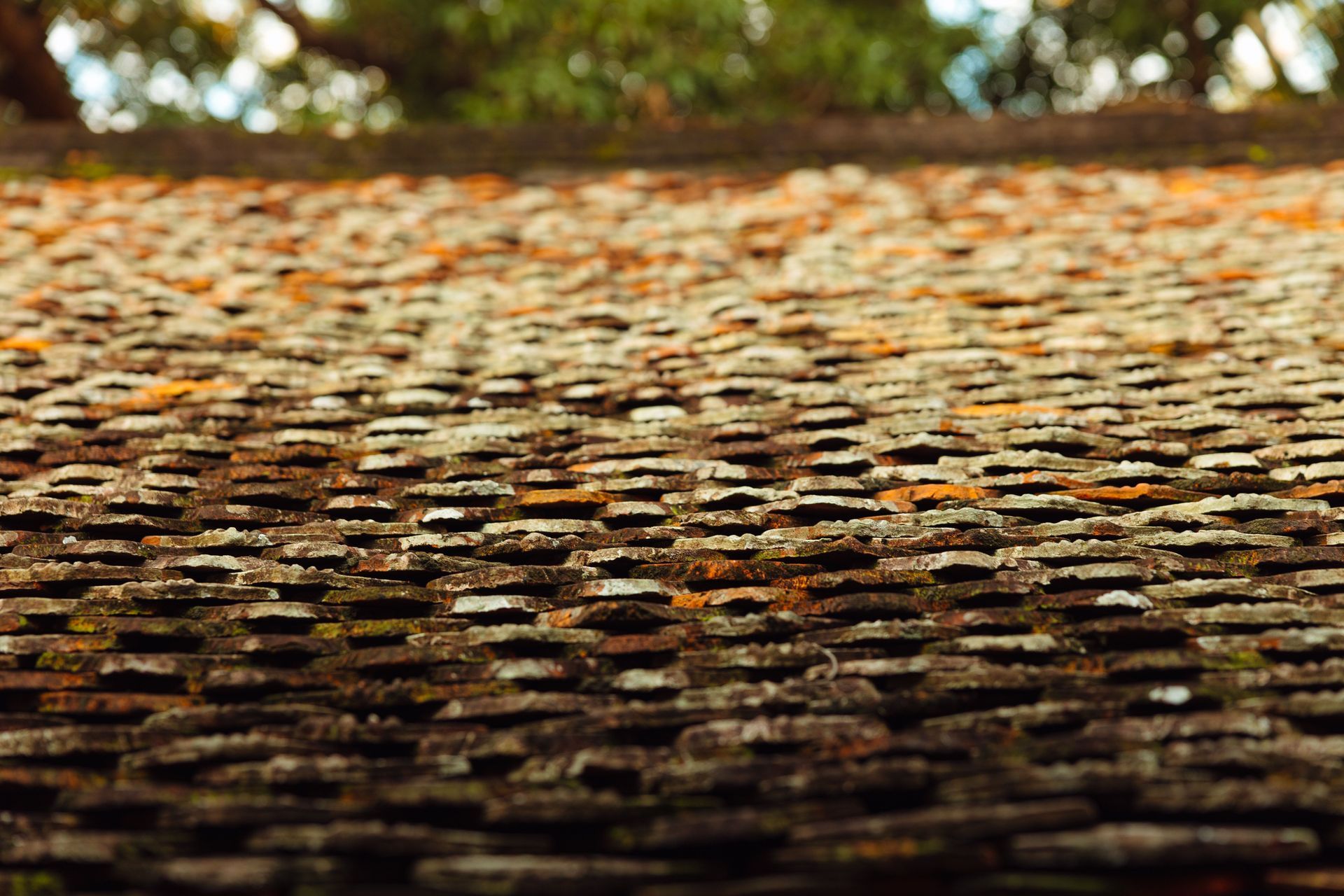
That history is still sitting on your roof. Walk through Cathays, Roath or Splott and the long rows of grey slate are the same material that roofed the city when it was the biggest coal port in the world. It has lasted this long for good reason.
2. What makes slate different from a modern tile
Slate isn't manufactured, it's split from natural rock. That gives it a lifespan modern concrete tiles struggle to match, but it also gives it a specific weakness. Slate cleaves along flat layers, and an old slate that has thinned with age can snap or flake if it's handled roughly.
The other thing to know is how a slate roof holds together. Each slate hangs on a couple of nails, and over a century those nails corrode. This is called nail sickness, and it's why old roofs start shedding slates in high winds even when the slate itself is fine. Care for a slate roof and you're really caring for the whole system, not just the surface.
3. Cleaning old slate without wrecking it
This is where a lot of damage gets done. A pressure washer will strip moss off slate, but it will also blast water up under the slates, loosen already-tired nails, and crack the thinner ones. On a roof that's lasted a century, that's a heavy price for a quick clean.
Soft washing is the safe way. Low-pressure water and a biocide clear the moss and algae and kill the growth at the root, with no force that could split a slate or drive water inside. The roof comes up clean and, just as important, it comes through the clean undamaged.
4. Keeping the gutters and valleys clear
A slate roof sheds water beautifully, but only if the water has somewhere to go. On Cardiff terraces the gutters and the valleys between roof slopes take a real beating, and moss washed down from the slates loves to collect there.
Blocked gutters push water back under the slates and down the walls, and that's where damp problems begin. Clearing them is humble work, but on an old roof it matters as much as anything you do to the slate itself. Keep the water moving and the roof stays dry underneath.
5. Spotting trouble early on a period roof
Old roofs give you warning signs if you know what to look for. A quick check from the ground with binoculars after a big storm can save you a much bigger bill. Watch for these:
- Slipped or missing slates, often the first sign of nail sickness setting in.
- A slate or two in the garden after high winds off the Channel.
- Sagging in the roof line, which can point to tired timbers underneath.
- Thick moss on the shaded slope, holding damp against the slate.
- Damp or staining on upstairs ceilings, a sign water is getting past the slates.
6. When to clean and when to call a roofer
Cleaning and repair are two different jobs, and it helps to know which you need. A roof that's sound but green wants a soft wash and a gutter clear. A roof that's shedding slates or letting water in needs a roofer to put the structure right first.
Often the sensible order is to have the roof cleaned so it can be seen properly, then deal with any repairs that the clean reveals. A good clean makes slipped slates and worn spots much easier to spot. There's no point treating moss on a roof that's about to need reslating, and no point reslating a roof whose only issue is a decade of neglected moss.
Frequently Asked Questions
How long does a Welsh slate roof actually last?
The slate itself can last well over a hundred years. The nails and battens holding it up wear out sooner, which is usually what triggers major repair rather than the slate failing.
Can I pressure wash my slate roof if I'm careful?
Better not to. Even careful pressure washing can crack thin old slates and force water underneath. Soft washing gets the same clean result without the risk.
Is moss actually damaging my slate or just sitting on it?
Over time it holds damp against the slate and can lift edges in a freeze. It also washes into gutters and blocks them. Worth removing before it does harm.
My roof keeps losing a slate every winter. Why?
That's often nail sickness, where century-old fixing nails have rusted through. A roofer can refix or replace as needed. It's common on Cardiff's older terraces.
Should I clean the roof before selling the house?
It usually helps. A clean slate roof looks cared for and reassures buyers, and it lets any real issues be seen and sorted rather than flagged in a survey.
Got an old slate roof that needs a careful hand?
Ben's Roof Cleaning cleans and maintains period slate roofs across Cardiff and South Wales, with over 15 years of experience. Get in touch or call 029 2002 8124
for a free, no-obligation quote.
Old slate rewards the owner who looks after it
There's something worth respecting about a roof that has kept the rain out since before your grandparents were born. Welsh slate earned its reputation the hard way, over generations of Cardiff weather. Clean it gently, keep the water flowing off it, and fix the small things before they grow, and your terrace roof will carry on doing its quiet job long after you've handed the house on.