Chimney, Flashing and Ridge: The Bits People Forget
When you think about your roof, you probably picture the broad slopes of tile or slate. But some of the most important parts are the small details you rarely give a second glance: the chimney, the flashing around it, and the ridge line along the top. These are exactly the spots where trouble tends to start.
Most leaks and damp problems don't begin in the middle of a roof slope at all. They start at the joins, the edges, and the awkward corners where different parts meet. If you want your Cardiff roof to stay watertight, these are the bits worth paying attention to, and they're easy to overlook until something goes wrong.
The quick answer: The chimney, flashing, and ridge are the weak points where most roof leaks begin, so they need checking and cleaning just as much as the main slopes do.
1. Why the Joins Matter Most
A flat run of tiles is actually pretty good at shedding water. The vulnerable places are wherever the roof has to change direction or meet something else, because that's where the covering is interrupted and water can find a way in if the detailing isn't sound.
On the older housing across Cardiff, from the Victorian terraces of Cathays to the interwar semis of Rhiwbina, these joins have often been weathering for decades. Years of wind and rain off the Bristol Channel test them hard, so they deserve a proper look rather than being taken for granted.
2. The Chimney and Its Problems
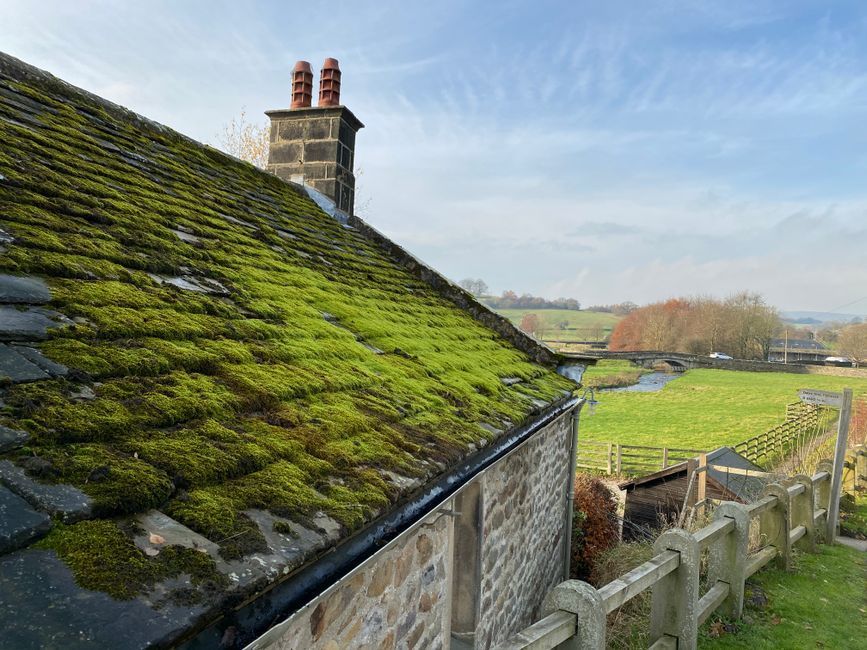
Plenty of Cardiff homes still have their original chimneys, and they take a battering up there. Exposed on all sides, the brickwork and mortar weather over time, and moss and plant growth often take hold on the damper faces where they catch the least sun.
A neglected chimney can let water track down inside, showing up as damp on the chimney breast in a bedroom. During a roof clean it's a natural time to clear off the growth and check the state of the brickwork and pointing, catching small issues before they turn into leaks.
3. Flashing: The Metal That Seals the Gaps
Flashing is the metal, usually lead, that seals the join between the roof and things like the chimney, walls, or valleys. It's a simple idea that does a vital job, bridging gaps that tiles alone can't cover and steering water safely back onto the roof.
When flashing lifts, cracks, or works loose, water gets straight in behind it. On Cardiff's exposed roofs, wind can gradually lift poorly fixed lead, and a build-up of moss and debris around it traps moisture that speeds up the wear, so it's well worth keeping clear.

4. The Ridge Along the Top
The ridge is the line right along the top of the roof where the two slopes meet, capped with ridge tiles. On many older Cardiff roofs these were bedded on mortar, and after years of weather that mortar cracks, crumbles, and lets the odd ridge tile work loose.
Loose or slipped ridge tiles are a real risk in our windy spells, and gaps in the mortar let water into the roof space below. Checking the ridge while cleaning the roof means these can be spotted early, before a ridge tile ends up in the garden after a gale.
5. How Growth Makes It Worse
Moss and lichen don't just settle on the open tiles, they love these detailed areas too. The mortar around ridge tiles and the sheltered edges of flashing hold moisture and give growth an easy foothold, and in Cardiff's damp climate it builds up quickly.
As that growth thickens, it holds even more water against the mortar and metal, quietly speeding up the decay. Clearing it away during a soft wash removes that constant dampness and gives you a clear view of what's actually going on underneath.
6. Cleaning These Areas Safely
These detailed spots need a careful touch, not a blast from a pressure washer. High pressure can dislodge flashing, wash out what's left of old ridge mortar, and drive water straight into the very joins you're trying to protect, making things worse rather than better.
A soft wash clears the moss and growth gently while leaving the detailing intact, and it comes with a proper look at the condition of it all. On Cardiff's older roofs, that combination of a gentle clean and a careful eye is what keeps these weak points sound.
- Chimney: weathered brickwork and mortar that can let damp track inside.
- Flashing: the lead seal at joins, which can lift, crack, or work loose.
- Ridge: capping tiles on ageing mortar that crumbles and slips in wind.
- Growth: moss and lichen that trap moisture in all these detailed areas.
- Safe cleaning: a gentle soft wash rather than damaging high pressure.
Frequently Asked Questions
Why do leaks usually start at the chimney or flashing?
Because these are the joins where the roof covering is interrupted. The open slopes shed water well, but wherever the roof meets a chimney or wall, the sealing detail has to do the work, and that's what wears or fails first.
Can moss around flashing really cause damage?
Yes, it traps moisture against the lead and the join, which speeds up corrosion and can help lift poorly fixed flashing. Clearing it removes that constant dampness and lets you see the condition underneath.
How do I know if my ridge tiles are loose?
Look for gaps in the mortar line, tiles sitting at a slight angle, or bits of mortar in the gutter or garden. On older Cardiff roofs, cracked ridge mortar is common and worth checking after windy weather.
Should these areas be cleaned differently from the main roof?
They need extra care. A gentle soft wash suits them, whereas high pressure can dislodge flashing and wash out ridge mortar, so these details should never be blasted like a solid tile surface.
Will a roof clean tell me if there's a problem up there?
It often does. Clearing the growth gives a clear view of the chimney, flashing, and ridge, so any cracked mortar, lifted lead, or worn brickwork can be spotted while the roof is being worked on.
Want the tricky parts of your roof checked and cleaned?
Ben's Roof Cleaning offers roof cleaning, moss removal, and gutter cleaning across Cardiff and South Wales, with over 15 years of experience. Get in touch or call 029 2002 8124
for a free, no-obligation quote.
The Small Details Keep the Whole Roof Dry
It's the chimney, flashing, and ridge that quietly decide whether your roof stays watertight, even though they're the parts nobody thinks about. Keep them clear of moss, get them checked when the roof is cleaned, and you deal with the weak points before they become leaks, which is exactly how you keep a Cardiff roof sound through the wettest winters.